

As a seasoned supplier of ABS PVC Alloy Sheets, I've encountered numerous inquiries regarding the thermal expansion coefficient of these versatile materials. Understanding this property is crucial for various applications, from automotive interiors to industrial components. In this blog post, I'll delve into the concept of the thermal expansion coefficient, its significance for ABS PVC Alloy Sheets, and how it impacts real-world usage.
What is the Thermal Expansion Coefficient?
The thermal expansion coefficient is a measure of how much a material expands or contracts in response to changes in temperature. It is typically expressed as a fractional change in length or volume per degree of temperature change. There are two main types of thermal expansion coefficients: linear and volumetric.
The linear thermal expansion coefficient (α) measures the change in length of a material per unit length per degree of temperature change. It is calculated using the following formula:
α = (ΔL / L₀) / ΔT
Where:
- ΔL is the change in length
- L₀ is the original length
- ΔT is the change in temperature
The volumetric thermal expansion coefficient (β) measures the change in volume of a material per unit volume per degree of temperature change. For isotropic materials (materials with the same properties in all directions), the volumetric thermal expansion coefficient is approximately three times the linear thermal expansion coefficient:
β ≈ 3α
Thermal Expansion Coefficient of ABS PVC Alloy Sheets
ABS (Acrylonitrile Butadiene Styrene) and PVC (Polyvinyl Chloride) are two widely used thermoplastics known for their excellent mechanical properties, chemical resistance, and processability. When combined to form an alloy sheet, they offer a unique set of characteristics that make them suitable for a variety of applications.
The thermal expansion coefficient of ABS PVC Alloy Sheets can vary depending on several factors, including the specific formulation of the alloy, the ratio of ABS to PVC, and the presence of any additives or fillers. Generally, the linear thermal expansion coefficient of ABS PVC Alloy Sheets ranges from approximately 70 to 100 x 10⁻⁶ /°C.
This relatively high thermal expansion coefficient compared to some other materials means that ABS PVC Alloy Sheets will expand and contract more significantly with temperature changes. It's important to take this into account when designing products or structures that use these sheets, especially in applications where dimensional stability is critical.
Significance of the Thermal Expansion Coefficient in Applications
The thermal expansion coefficient of ABS PVC Alloy Sheets has several important implications for their use in various applications:
Automotive Interiors
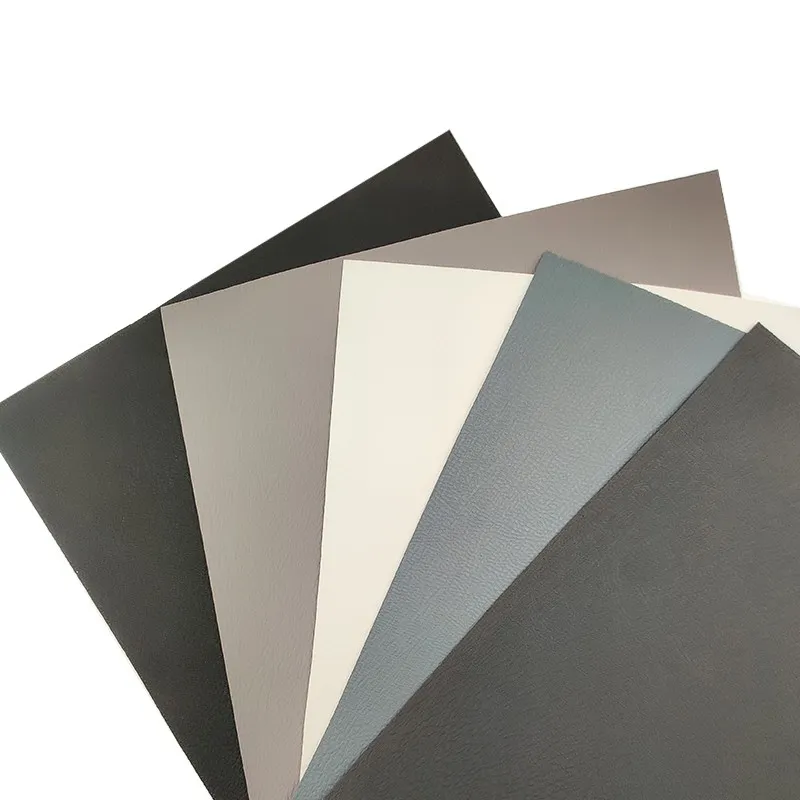
In the automotive industry, ABS PVC Alloy Sheets are commonly used for interior components such as Bus Dashboard Leather and door panels. The high thermal expansion coefficient of these sheets can cause them to expand and contract with temperature changes inside the vehicle. If not properly accounted for, this can lead to issues such as warping, cracking, or gaps between components. To mitigate these problems, automotive designers often use expansion joints or flexible mounting systems to allow for the movement of the sheets.

Industrial Enclosures
ABS PVC Alloy Sheets are also used in industrial enclosures to protect electrical and electronic equipment from environmental factors. The thermal expansion of these sheets can affect the fit and seal of the enclosures, potentially allowing dust, moisture, or other contaminants to enter. By understanding the thermal expansion coefficient of the sheets, manufacturers can design enclosures with appropriate clearances and seals to ensure proper protection.
Construction
In construction applications, ABS PVC Alloy Sheets may be used for wall cladding, roofing, or decorative elements. The thermal expansion of these sheets can cause them to expand and contract with changes in outdoor temperature. If not properly installed, this can lead to buckling, delamination, or other structural issues. Builders and contractors need to consider the thermal expansion coefficient when specifying and installing these sheets to ensure long-term performance.
Controlling Thermal Expansion
While the thermal expansion coefficient of ABS PVC Alloy Sheets is inherent to the material, there are several ways to control or minimize its effects:
Material Selection
Choosing an ABS PVC Alloy Sheet with a lower thermal expansion coefficient can help reduce the amount of expansion and contraction. Some manufacturers offer specialized formulations of ABS PVC alloys that have been engineered to have improved dimensional stability.
Design Considerations
Incorporating expansion joints, flexible connections, or other design features into products or structures can allow for the movement of the sheets due to thermal expansion. This can help prevent stress buildup and damage to the material.
Temperature Management
In some applications, it may be possible to control the temperature environment to minimize the temperature changes experienced by the ABS PVC Alloy Sheets. This can be achieved through insulation, ventilation, or the use of heating or cooling systems.
Conclusion
The thermal expansion coefficient of ABS PVC Alloy Sheets is an important property that affects their performance in a variety of applications. Understanding this property and its implications is crucial for designers, engineers, and manufacturers who use these sheets. By considering the thermal expansion coefficient during the design and installation process, it is possible to minimize the negative effects of thermal expansion and ensure the long-term performance of products and structures made from ABS PVC Alloy Sheets.
If you're interested in learning more about our Automotive ABS Plastic Sheet or PVC ABS Sheet products, or if you have any questions about their thermal expansion properties, please don't hesitate to contact us. We'd be happy to discuss your specific requirements and provide you with the information you need to make an informed decision. Our team of experts is always available to assist you with your procurement needs and help you find the right solution for your project.
References
- "Thermoplastics: Properties and Applications" by Charles A. Harper
- "Plastics Engineering Handbook" by Myer Kutz
- Technical data sheets provided by ABS PVC Alloy Sheet manufacturers